The real challenge with EU law is not just knowing what the rules are – it is also knowing when they matter.
A regulation adopted in 2024 might not start to apply until 2026. Another requirement in the same law could be delayed until 2028. Most laws arrive in waves, with staggered application timelines and legal deadlines.
This means compliance is not a one-off task. It is a moving target and missing a single date can put an entire project or business at risk. I have a solution for that.
One law, many compliance dates
Take the Data Act (Regulation 2023/2854) as an example: at first glance, it appears as a single piece of legislation with a clear start date. In reality, different parts start to apply over multiple years. Put simply:
- 22 Dec 2023 – Final act published in the Official Journal
- 11 Jan 2024 – Enters into force (Article 50) and empowers Commission to adopt delegated acts (Article 45.2)
- 12 Sep 2025 – Main application date (see Article 50)
- 12 Sep 2026 – More rules kick in (Article 50)
- 12 Sep 2027 – Even more requirements (Article 50)
- 12 Sep 2028 – Deadline for legal review (Article 49)
So when does the Data Act “apply”? The answer is: it depends which article you are looking at.
Why manual tracking fails
Multiply this situation by dozens or – depending on the company/organisation you represent – by hundreds of EU laws, and you begin to see the problem.
Manual tracking with spreadsheets and calendars simply does not meet this challenge. It is slow, error-prone and too risky for EU laws that roll out over years (potentially with incorporation into national rulebooks, delays and revisions along the way).
After all, compliance with complex new rules takes time and resources, and there are often advantages to responding early. Finding yourself non-compliant, by contrast, does not just mean legal exposure but can derail business operations, trigger financial penalties and cause reputational damage.
A smarter way to track deadlines
To cut through this complexity, I built a new tool to track EU law and stay ahead of the rules. It is designed to make compliance timelines visible and manageable.
Right now, the tool already:
- 📅 Tracks application dates and deadlines up to 2040
- 📌 Links each deadline to the exact article in the law
- ✅ Covers all major EU legislation since 2019, with more being added.
- 🔥 Does much more beyond compliance tracking (see here)
Think of it as a regulatory timeline you don’t have to build and constantly update yourself.
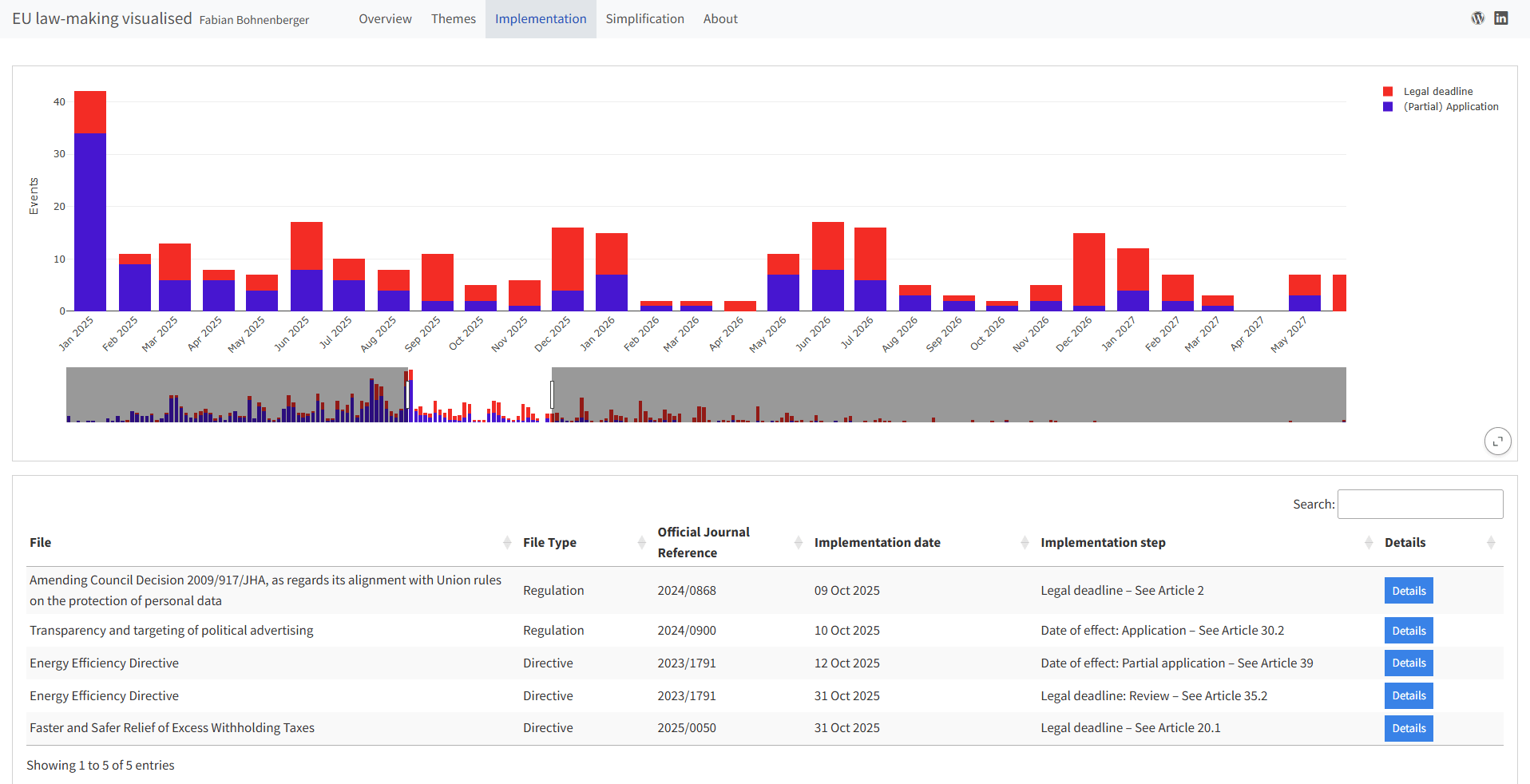
See how it works here:
Or want to review all dates of a specific law instead? Just click on Details and see all legal deadlines for that law listed in the table – along with all steps during its adoption process:
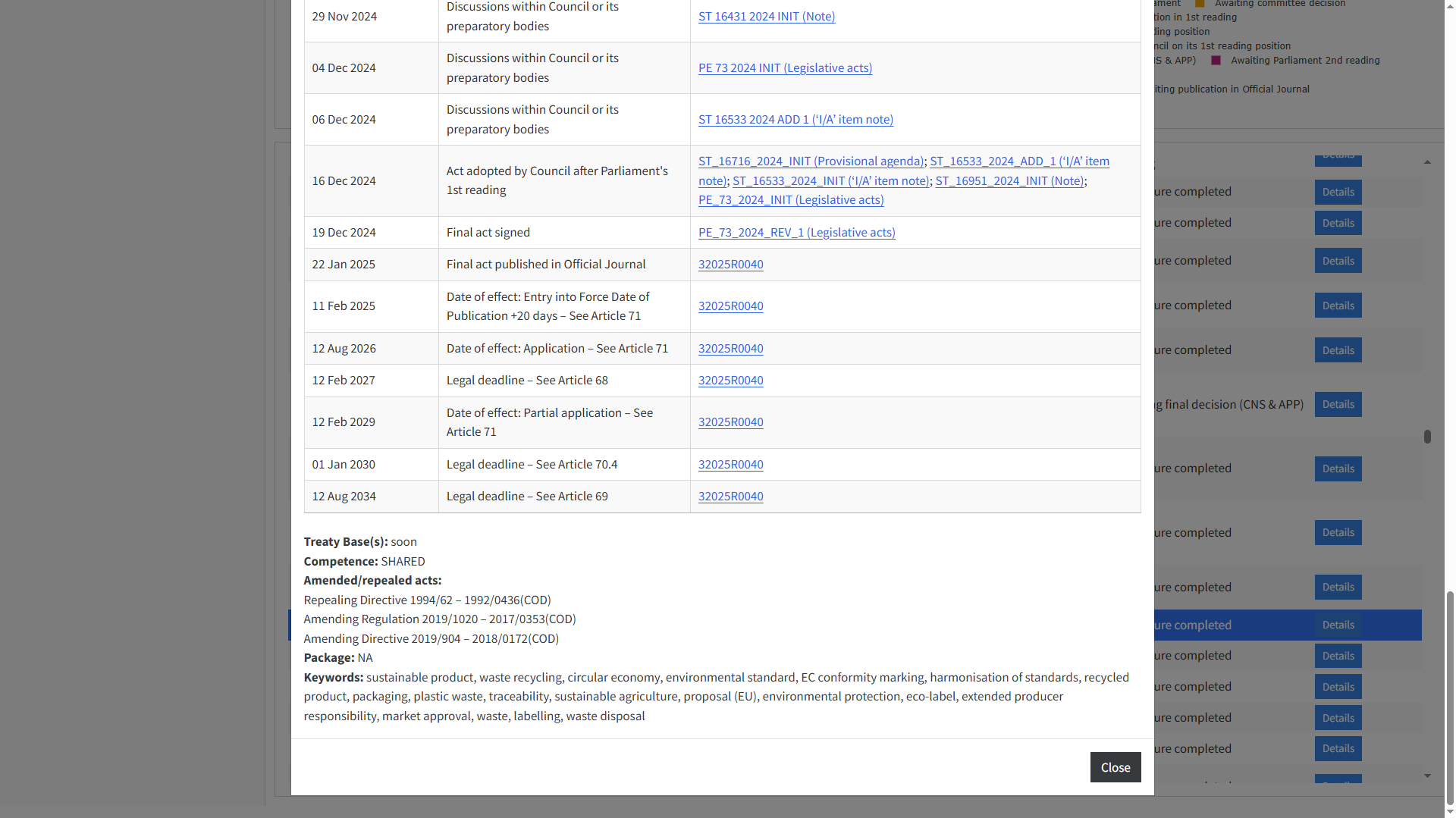
Again, multiply this by 650+ (the number of laws adopted since 2019 and currently included in my tracker) and the advantages of this automated, interactive approach are clear.
Instead of manual tracking, you can see at a glance what applies today and what is coming next year, or five years from now.
Delegated and implementing acts are not included yet, which would further complicate the picture, but I am planning to add them soon.
And there is more: the tracker already does much more than compliance tracking – and it’s free (for now)!
👉 Try it here and share with your network if you find it useful!
(Best viewed on a large screen. Feedback always welcome)