R
-
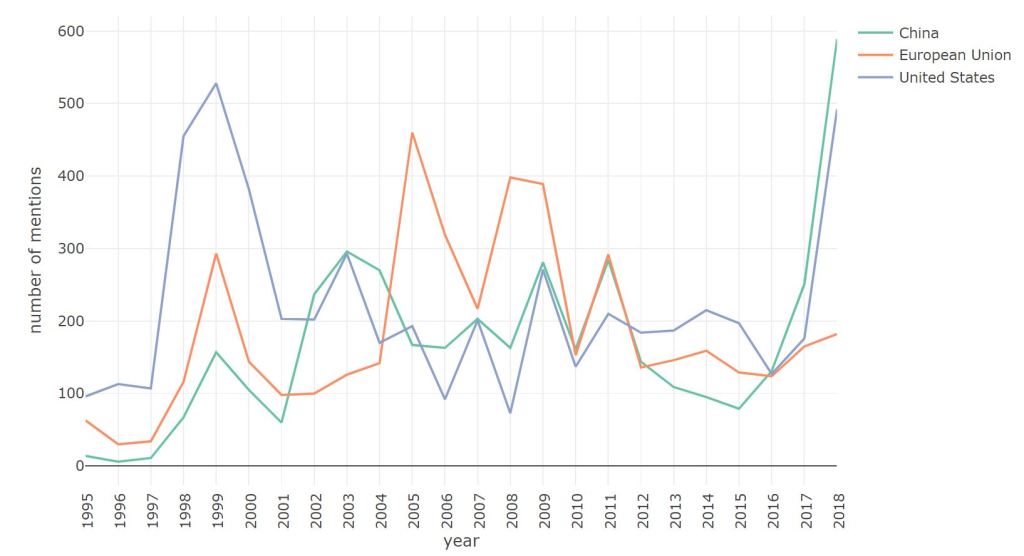
Diplomacy at the WTO: The General Council
I am currently extending and analysing my dataset on diplomatic interactions in the World Trade Organization (WTO). This post takes a brief look at the General Council, the highest decision-making body of the WTO. Just as 22 other WTO bodies,… Continue reading
-
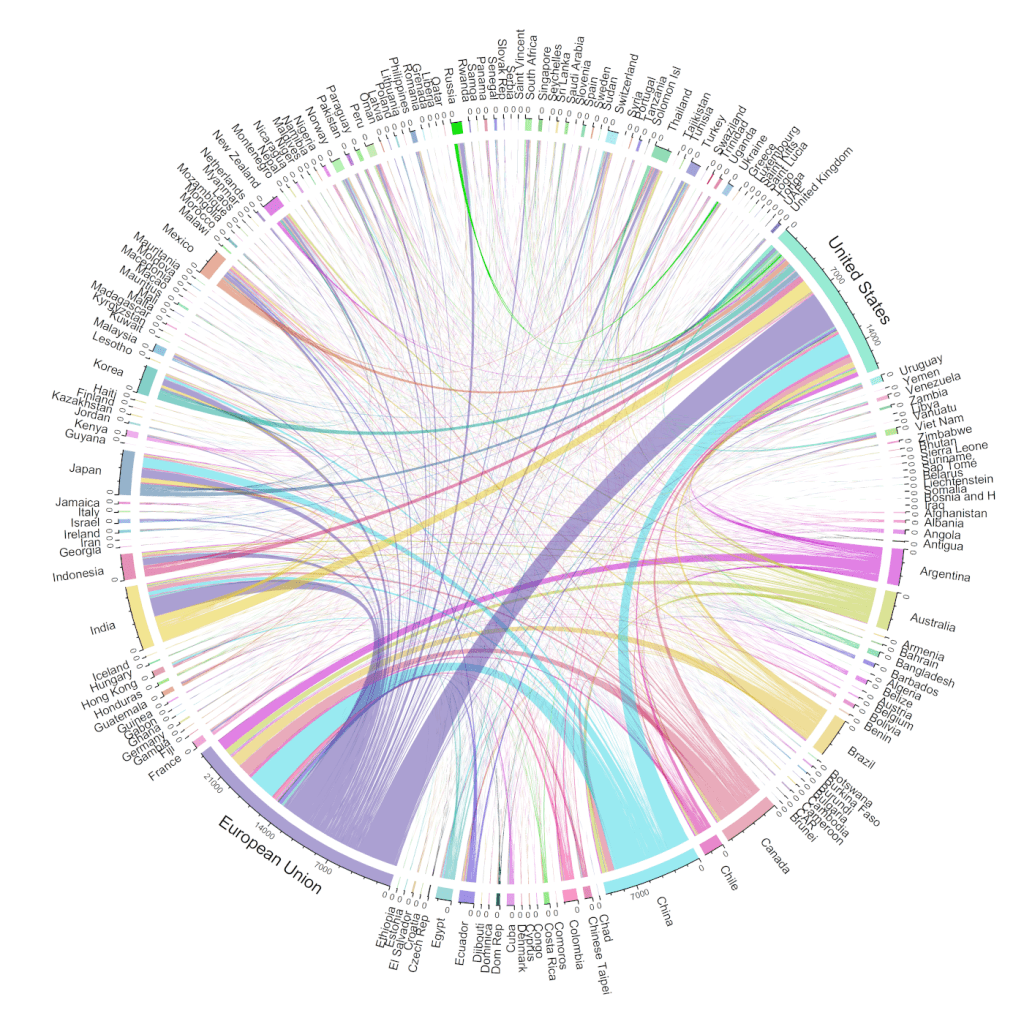
Drawing Multilateralism: Everyday Diplomacy in the World Trade Organization
The essence of diplomacy is communicating and promoting national interests on the world stage. But how is this accomplished in practice? Who talks to whom? How regularly? And with what effect? The diplomatic exchanges in the World Trade Organization (WTO)… Continue reading
-
Who Supports Continental Integration? Treaty Commitment in the African Union
This posts summarises preliminary results of my analysis of treaty commitments in the African Union. The assessment is part of a research project for the German Institute of Global and Area Studies (GIGA) that explores the behaviour of authoritarian countries in… Continue reading

-
The Spaghetti Bowl: Visualising the Proliferation of Preferential Trade Agreements
The world of preferential trade agreements (PTAs) is rapidly evolving: governments increasingly negotiate on the bilateral and regional level. This activity has created a complex web of PTAs spanning the globe. Economics professor Jagdish Baghwati likened the phenomenon to a “spaghetti bowl” in the… Continue reading
-
German Parliament: Part II
Following up on my recent post on the German Parliament, here is another attempt at visualising the data – I jumped on the recent gif-bandwagon. Continue reading
-
A Brief Look at Diversity in the German Parliament
In light of the upcoming German federal elections in September 2017, I take a brief look at the age and gender distribution in the German Parliament – the Bundestag – from its establishment in 1949 to the last general election in 2013. The figure… Continue reading

-
Global Trends in Regime Development and Democratisation
I recently worked with a few fascinating datasets that describe the transformation and democratisation of national governments over the last decades. Based on this very comprehensive data, this post discusses important trends in global regime development from 1972 to 2015… Continue reading
-
The Economic Impact of Sanctions against Russia on EU Member States
While attending a workshop on international sanctions a few weeks ago, I was fortunate to meet the author of the fascinating and very recent article “The Redistributive Impact of Restrictive Measures on EU Members: Winners and Losers from Imposing Sanctions on Russia“. Much has been… Continue reading
-
An Example of the Successful Use of Export Taxes and Its Value for North-South Trade Negotiations
A recurring problem in the discussion on North-South trade relations is identifying good examples that show how controversial – trade-distorting – policy instruments are successfully used to promote economic development. The search is not a purely academic exercise as the case studies can be used… Continue reading
-
The UK-EU Trade Relationship: Part II
Looking again at UK trade data, I discuss what tariff costs UK exporters would face in the unlikely scenario that no Brexit deal (or interim trade agreement) can be reached and commercial relations would have to continue on a ‘most… Continue reading
-
The UK-EU Trade Relationship: Part I
In light of the lively discussion over the UK’s future trade agenda, I take a brief look at the UK’s existing economic ties with Europe and beyond. Given the intricacies of these relations, more posts on this topic will follow. 1.… Continue reading
-
Visualizing Trade Agreements: An Interactive R Shiny App
I recently created an interactive tool for visualizing existing trade agreements based on the Design of Trade Agreements (DESTA) Database. The dataset includes customs unions, free trade agreements or partial free trade agreements of various types that have been signed between… Continue reading
-
External Intervention to Strengthen Democracy in Africa
Although more competitive forms of authoritarianism and electoral democracy are today prevalent in most African countries, democratisation has slowed and in some places reversed. This coincides with an ever-growing rift between African citizens who are demanding further democratic rights and… Continue reading
 Fabian Bohnenberger