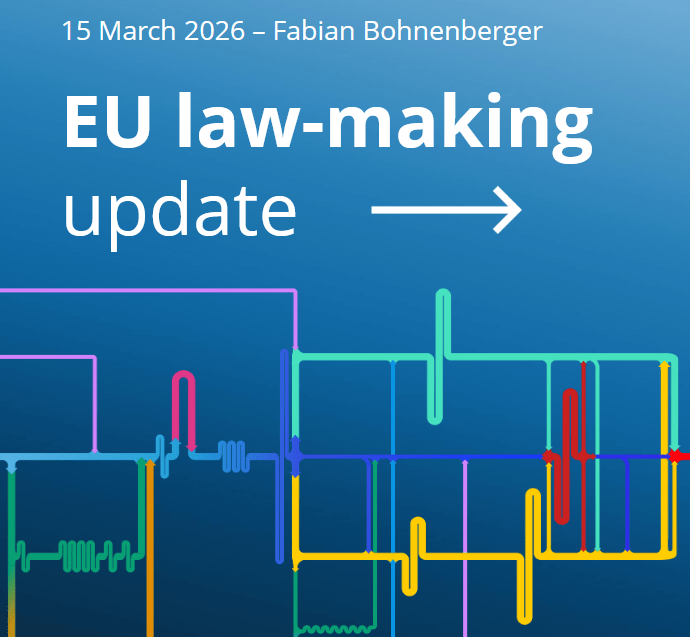
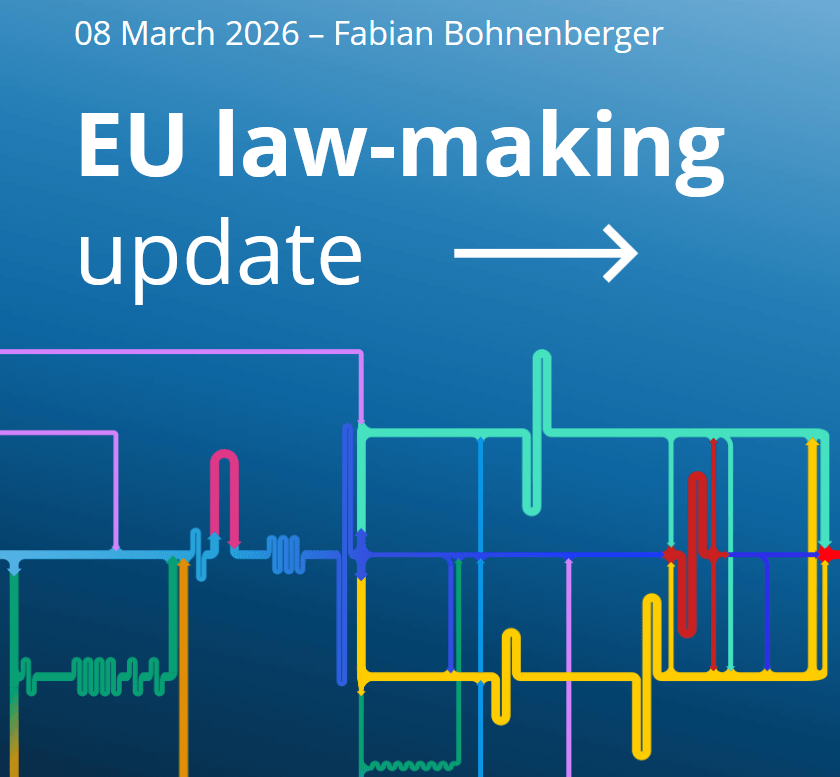
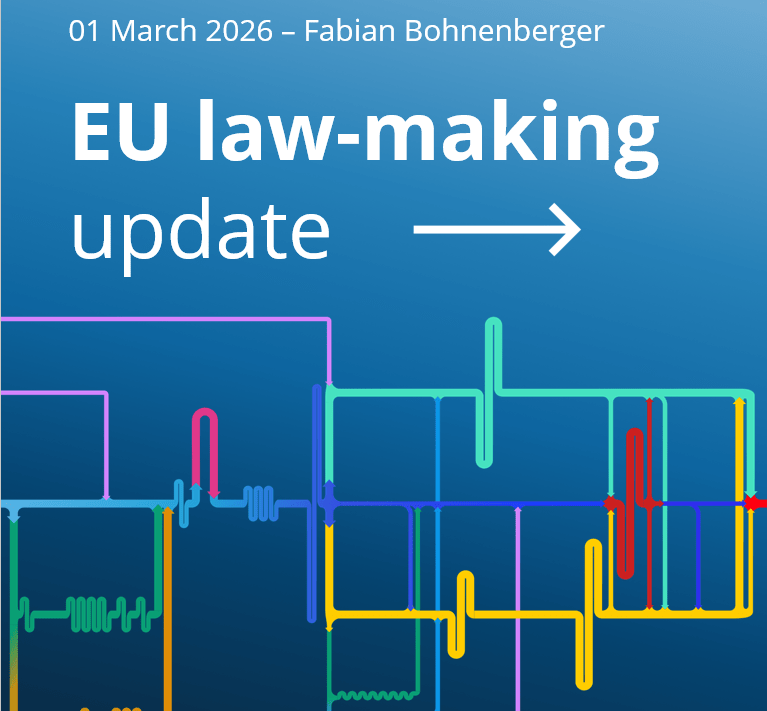
I’m excited to share the results of a recent collaboration with Aaron McLoughlin where we mapped the intricate process of EU law-making. We closely examined the revision of the CLP Regulation and drew a detailed flowchart that captures the multi-year legislative journey.
Our goal was to show in detail how EU law is made – on a single page. We identified the many complex steps involved while trying to make the process easy to follow.
You decide if we were successful.

Mapping EU Law-making
Although we focused on the revision of the CLP Regulation (a key pillar of EU chemicals regulation), the process we depict is representative of EU law-making in general. The key steps apply broadly to any legislation moving through the Ordinary Legislative Procedure – with only slight variations.
You do not need to be familiar with the CLP Regulation or why it is being revised to use our map. It is meant to illustrate how EU laws are made more generally.
Earlier this week, Aaron presented the figure at the European University Institute’s “Unboxing the Commission” course.
Key features of our map:
1. The full picture – on a single page
We want to show the entire journey of a draft law.
Most other depictions focus on the “legislative process”, i.e., the debates within and between the European Parliament and the Council once the Commission has published its legislative proposal. At this point many key decisions have already been made.
Our map shows a more complete picture. It begins much earlier in the process and follows the draft law from the initial evaluation of existing legislation through legislative planning and drafting all the way to the revised regulation entering into force.
This shows EU law-making in most (unfortunately still not all) of its fascinating complexity. In total, we capture around 120 steps; Aaron lists them here.
2. Uniform timeline
We also want to make you feel the rhythm of EU law-making.
If you are working on draft legislation, it is crucial to know exactly what steps are coming up next and when.
To help you understand the sequence of events, we use a relatively uniform timeline across the figure. While the precise timings reflect the peculiarities of the CLP revision, the figure offers you a better sense of the general pace of EU law-making. (I explore the rhythm of the legislative process in more depth here.)
3. Parallel steps & interactions
We also include parallel developments and steps that interact with the core process between the Commission, the Parliament and the Council.
There is a tendency to oversimplify the process. In reality, many developments happen in parallel, with constant interaction between different players. (After all, it is in the very nature of EU law-making that it involves many actors.)
Our map highlights these parallel steps and interactions. It also includes other crucial but often overlooked aspects, such as expert group discussions, the review by national parliaments, and the comment period at the World Trade Organization.
I hope you find this useful – we would love to hear from you if you do.
This work builds on previous posts, including my case study of the Ecodesign Regulation (here) and presentation on the Commission’s internal steps to prepare a legislative proposal (here).

 Fabian Bohnenberger
2 responses to “A Detailed Map of EU Law-Making”
[…] of you have asked for further explanation of our detailed flowchart on the EU law-making process, so here it is: a concise narrated guide. I’ll highlight some of the […]
LikeLike
[…] Aaron lists the steps 👉 I introduce the flowchart👉 Step-by-step walkthrough of the […]
LikeLike