Welcome back, everyone! I hope you had a refreshing holiday. As we prepare for EU law-making to restart, it is the perfect time to take stock of the legislative accomplishments over the last mandate.
To help with that, I’ve created a tool for you – not quite a time machine, but a window into EU-lawmaking over the past five years. Basically, I took a snapshot of the Ordinary Legislative Procedure every two weeks, from 2019 to 2024, mapping the journey of 548 proposals as they moved through the EU process to become law.
Here is the result, showing you how successful and busy EU lawmakers were over the past years.
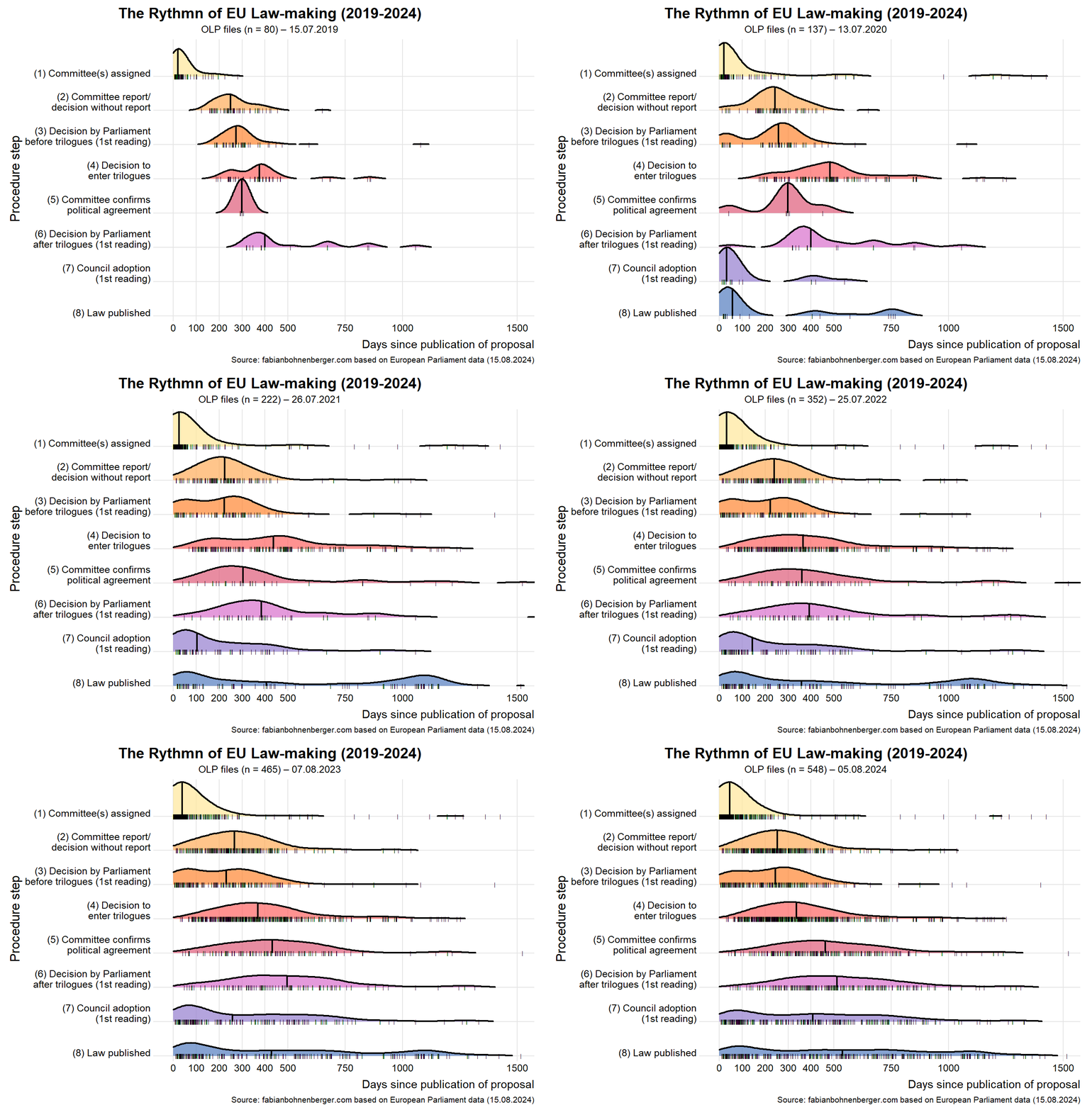
The figure captures all laws moving through the Ordinary Legislative Procedure (minus a few very recent and withdrawn proposals). I exclude some extreme values above 1500 days here to make it legible.
What eventually looks like barcodes under each ridgeline show when each law reached this step. The black line bisecting each ridge represents the median, meaning half of all observations are below and half are above this value.
I used the summer break to write three posts explaining the legislative process and timeline(s) in more detail, see here:
- Part 1 introducing the data and visualisation
- Part 2 focusing on urgent laws and special cases
- Part 3 exploring how trilogues shape the pace of law-making
With most of the analysis done, this post shifts the focus to some broader observations based on a dynamic view of EU law-making over the years, as shown above.
1. Unfinished business
First, you’ll notice that the mandate does not begin or end with a blank slate.
When the term started in mid-2019, there was some unfinished legislative business from the previous parliamentary term. Over the following months, legislators decided to continue work on more unfinished files, which explains why some observations are positioned further to the right in late 2019 and 2020.
Likewise, by the end of the mandate in mid-2024, around 150 OLP files remain at various stages of the legislative process. While you can’t see this directly in the figure, you can still spot new files arriving late in the mandate.
2. Expectations (should) change
Second, I use a ridgeline plot here to show how expectations about the adoption timeline (need to) shift over the course of a five-year mandate.
Using ridgelines in a dynamic context can be problematic because they need to be recalculated as more data arrives over time. This causes their height to change, which can be confusing.
I still rely on ridges here because they effectively show the distribution of the data. In particular, they help highlight clusters, i.e., where laws took a similar amount of time to reach a step in the legislative process.
Lawmakers and stakeholders form expectations about the time it takes to finalise EU law. However, as we can see even at this aggregate level, the peaks and troughs move substantially over time. This means we need to be careful about adopting expectations about “normal” timelines to adopt EU law.
For a discussion of the static version of the plot, see the posts linked above.
3. Averages/medians march to the right
Third, you’ll notice that the median values (represented by the black line bisecting each ridge) increase over time.
This is expected – as time goes by, more and more files move from one stage to the next. This means that average and median values – measures of the central point in the data – tend to rise. (Averages increase faster due to a few outliers.)
However, it is important to understand that this effect continues beyond the legislative term. The current snapshot is not final. Some proposals are still moving through the process. Once these are adopted and published, we’ll need to update the summary statistics to reflect the new data.
Keeping track of EU law never ends …


 Fabian Bohnenberger
One response to “Mapping EU Law-Making: 2019-2024”
[…] 🧵 How long does it take the EU to adopt a law? I explore the EU’s legislative process and build a timeline of its key steps based on a large dataset. (Part 1, Part 2, Part 3, summary & timelapse) […]
LikeLike