The essence of diplomacy is communicating and promoting national interests on the world stage. But how is this accomplished in practice? Who talks to whom? How regularly? And with what effect?
The diplomatic exchanges in the World Trade Organization (WTO) have kept trade flowing and growing since the organisation’s creation in 1995. The WTO’s multilateral rulebook today provides the baseline to which 164 member states have committed themselves.
But, surprisingly, this everyday work between diplomats remains under-explored and poorly understood. The idea of multilateralism suggests that every member state is involved in the decision-making and implementation of what has been collectively agreed. However, this does not mean that all are contributing equally or driving the discussions.
The figure below provides a first glimpse at the interactions between WTO members since the organisation’s creation. It highlights the dominance of some members in the multilateral process – the strong ties between big trading nations appear almost superimposed onto a much more fragile assembly of loosely interacting states.
Figure: Who talks to/about whom?
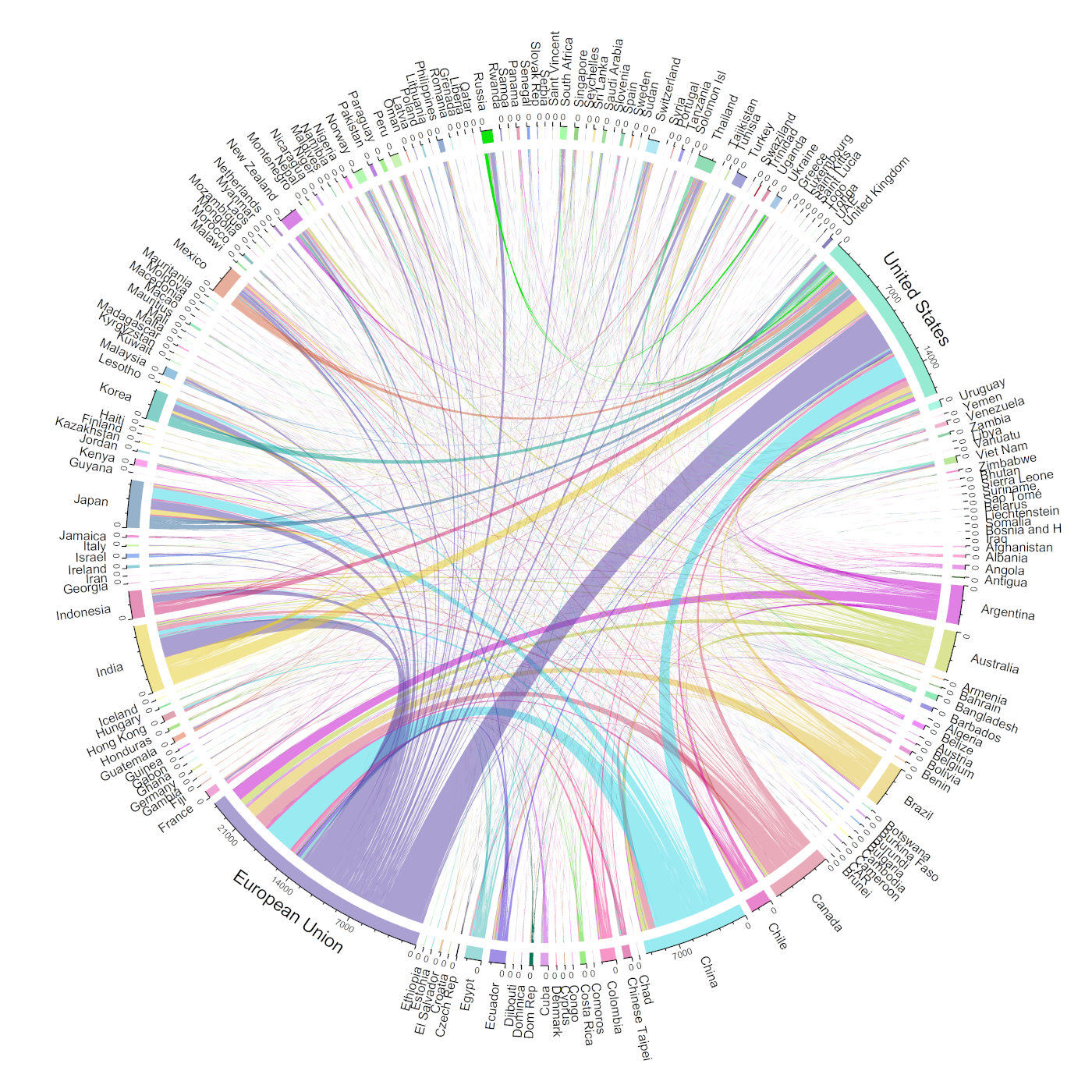
The figure is created based on an automated quantitative textual analysis of a sample of WTO committee minutes. The primary interest in this figure is who talks with/about whom and not how often they take the floor in the discussions. This involves some caveats, the most important one being that the number of interactions shown does not equal the real contributions because (1) not every contribution is recorded in the minutes and (2) only those contributions for which a close link to another member could be established are included in the figure.
This is work in progress and part of my PhD project on diplomatic practice. The figure benefits immensely from the R quanteda & circlize packages.

 Fabian Bohnenberger